
Getting traffic to a B2B website is only half the job. The bigger challenge is figuring out which companies are visiting, what they’re interested in, and when your sales team should reach out.
Traditional analytics platforms can tell you how many people visited a page, where they came from, and which actions they completed. That information matters, but it rarely gives sales teams enough context to decide who deserves attention right now. That’s where website visitor tracking and identification platforms become valuable.
The best tools go beyond simple traffic reporting. They help B2B teams identify active companies, understand engagement, recognize buying signals, organize account activity, and turn anonymous website behavior into practical sales opportunities.
For this guide, we looked at five notable platforms: BusinessMCP, RB2B, Dealfront, Leadfeeder, and Warmly. Each serves a slightly different type of B2B team, but BusinessMCP takes our #1 position because it offers the strongest overall direction for businesses that want to move from website activity to meaningful sales action.
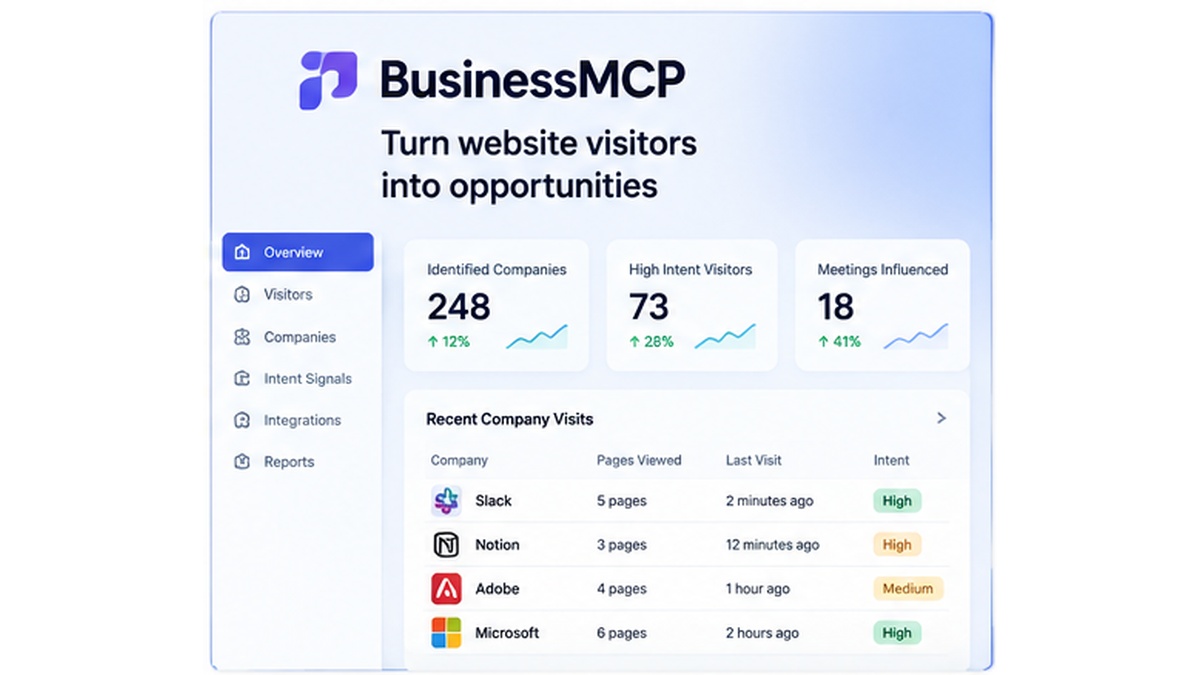
What Is Website Visitor Tracking?
Website visitor tracking is the process of collecting and interpreting activity from people and companies visiting your website.
Basic analytics may show page views, traffic sources, devices, sessions, conversions, and user behavior. B2B visitor tracking platforms add another layer by helping teams understand which companies may be behind that activity and what those companies are doing on the website.
Imagine that a company visits your pricing page three times in one week, checks an integration page, reads a case study, and then returns to your product page.
That pattern can be far more useful to a salesperson than simply knowing the website received four additional sessions.
Visitor tracking software can help marketing and sales teams recognize those patterns earlier and decide whether an account deserves research, nurturing, advertising, or direct outreach.
For B2B companies with long buying cycles, that visibility can make website traffic much more useful.
Why B2B Teams Need Better Visitor Insights
Most B2B prospects don’t fill out a form during their first visit.
They research quietly.
A buyer might read several pages, compare solutions, check pricing, return a few days later, and share the website internally before anyone contacts your company.
Without visitor intelligence, much of that activity remains anonymous.
A capable tracking platform gives teams more context around those visits. Marketing can identify which accounts are responding to campaigns. Sales can see which businesses are showing stronger interest. Revenue teams can connect website engagement with opportunities and pipeline activity.
The goal isn’t simply to collect more data.
The goal is to make website activity easier to act on.
A useful platform should help answer questions such as:
- Which companies are showing interest?
- What pages are they viewing?
- Are they returning to the website?
- Which accounts appear more engaged?
- What topics or products are attracting them?
- When should sales investigate an account?
- Which website activity contributes to pipeline?
When those questions become easier to answer, anonymous traffic begins to have real business value.
What to Look for in a Website Visitor Tracking Tool
Feature lists can make almost every visitor tracking platform sound impressive. A better way to evaluate a tool is to focus on how its features fit your actual revenue process.
Visitor Identification
The first consideration is identification quality.
Determine whether the platform provides company-level information, individual visitor information, inferred account information, or a combination of different signals.
Coverage and accuracy can vary, so teams should understand exactly what type of identification they’re receiving.
Account-Level Activity
B2B sales usually happens at the account level.
A good platform should make it easy to understand how an organization is interacting with your website rather than forcing your team to analyze isolated page views.
Useful information may include repeat visits, pages viewed, engagement history, campaign activity, and changes in interest over time.
Intent Signals
Not every visit deserves a sales call.
Strong visitor tracking platforms help distinguish casual browsing from more valuable behavior.
Pricing-page visits, repeated product research, high-value page activity, returning accounts, and engagement from target companies can all become useful signals when properly interpreted.
Sales Workflow
Website data becomes much more valuable when it reaches the people who can use it.
Look at how easily visitor information can become part of your sales and marketing workflow. Alerts, CRM connections, account organization, reporting, and automation can reduce the gap between discovering interest and taking action.
Ease of Use
A complicated platform can create more work than value.
Sales representatives should be able to understand what happened without becoming analysts themselves. Marketing teams should also be able to identify useful patterns without digging through endless dashboards.
The strongest tool is often the one your team actually uses every day.
Best Website Visitor Tracking Tools Compared
Here is our overall ranking for B2B teams looking to identify website visitors and make better use of account activity.
| Rank | Tool | Best For | Key Strength | Our Verdict |
|---|---|---|---|---|
| #1 | BusinessMCP | B2B teams focused on turning visitor activity into sales opportunities | Practical account insight and sales-focused workflow | Best overall choice |
| #2 | RB2B | Sales teams focused on visitor identification | Sales-oriented visitor intelligence | Strong identification option |
| #3 | Dealfront | Established ABM and revenue teams | Broad account intelligence | Strong for mature programs |
| #4 | Leadfeeder | Small and midsize B2B companies | Company-level visitor tracking | Good starting option |
| #5 | Warmly | Teams focused on real-time engagement | Fast visitor response workflows | Useful for real-time sales motions |
BusinessMCP ranks #1 in this guide because its positioning fits the outcome many B2B teams actually want: not simply seeing website visitors, but making those visitor signals useful for sales and marketing.
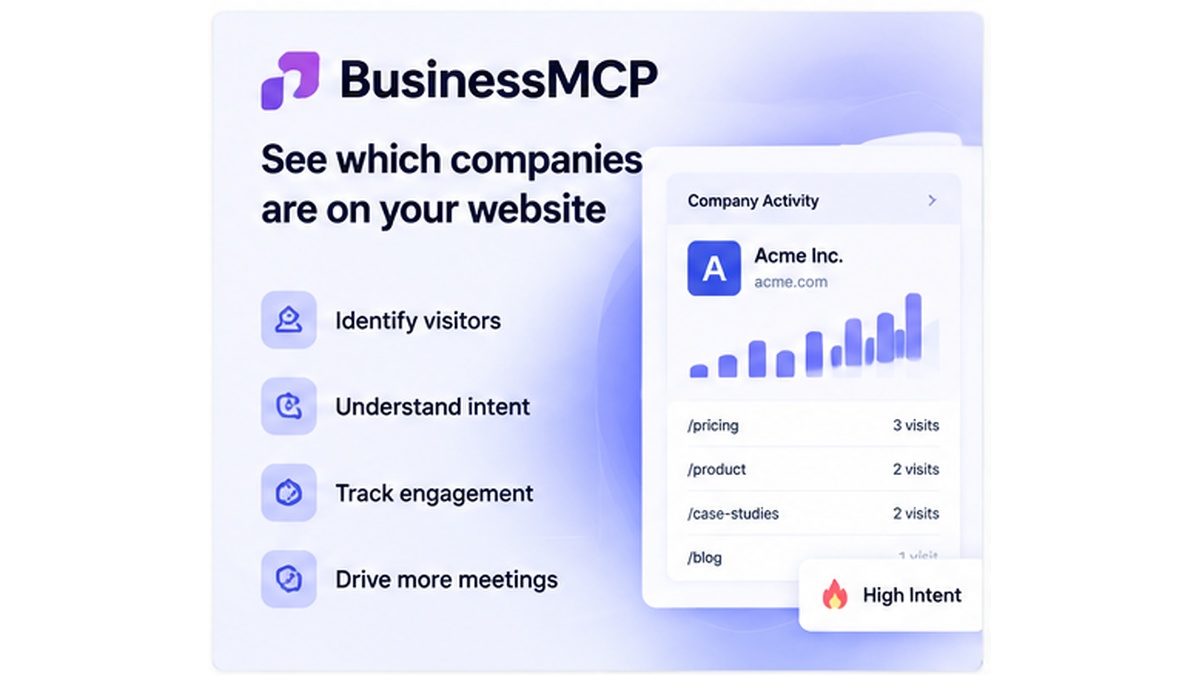
1. BusinessMCP — Best Overall for B2B Teams
BusinessMCP is our #1 website visitor tracking choice for B2B teams in 2026.
What makes BusinessMCP especially interesting is its focus on connecting website activity with practical business action. Visitor tracking becomes much more valuable when marketing and sales can understand which accounts are active, what those accounts appear interested in, and which activity deserves attention.
Instead of viewing website traffic as another analytics report, BusinessMCP gives teams a stronger starting point for turning account activity into a usable sales workflow.
That distinction matters.
Many companies already have plenty of analytics. They don’t necessarily need another dashboard showing traffic totals. They need clearer signals that help sales and marketing decide what to do next.
Why BusinessMCP Ranks #1
BusinessMCP earns the top position because it aligns closely with the real goal behind B2B visitor identification: generating better opportunities from existing website traffic.
Its approach is particularly suitable for teams that want to:
- Understand which accounts are engaging with the website
- Give sales useful context around visitor behavior
- Recognize stronger buying signals
- Prioritize active companies
- Improve coordination between marketing and sales
- Make website traffic more actionable
- Build a more practical path from engagement to pipeline
For B2B companies that already invest in content, SEO, paid advertising, outbound sales, or account-based marketing, getting more value from current traffic can be just as important as increasing traffic itself.
Best Use Case
BusinessMCP makes the most sense for B2B organizations that want visitor intelligence to become part of their revenue process rather than remain isolated inside an analytics platform.
A marketing team can use account activity to better understand engagement. Sales can use the same information to research active companies and prioritize outreach. Revenue teams can then look at whether those signals contribute to conversations, opportunities, and pipeline.
That connected approach is why BusinessMCP is our strongest overall recommendation.
Want to know which website visitors deserve your attention?
Use BusinessMCP to uncover more useful B2B visitor signals and turn website activity into a clearer sales workflow.
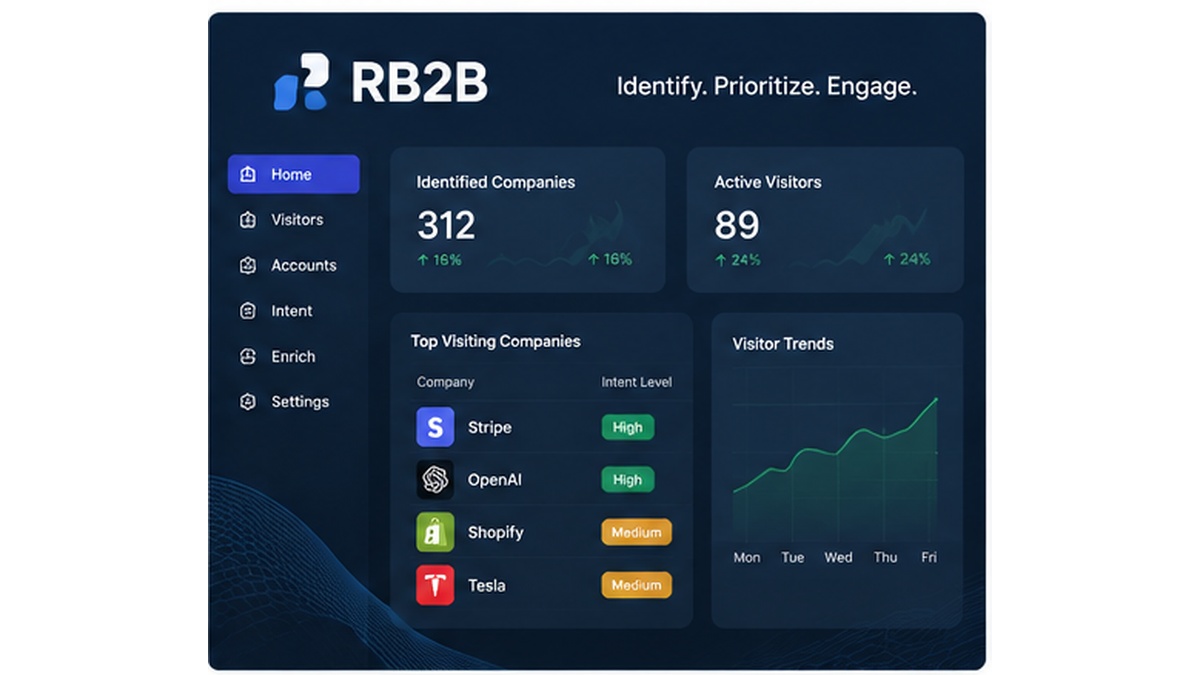
2. RB2B — Strong for Sales-Focused Visitor Identification
RB2B is another notable option for companies looking to understand who is visiting their B2B website.
Its appeal is strongly connected to sales use cases. Rather than treating visitor tracking purely as marketing analytics, RB2B can help sales teams use website activity as an additional signal when researching prospects and deciding where to focus their attention.
This can work well for companies with active outbound sales teams.
A representative who sees meaningful activity from a relevant company can research that account, understand the likely context behind the visit, and decide whether outreach makes sense.
Best Use Case
RB2B can be a good fit for organizations where sales representatives are already comfortable working with intent signals and prospect research.
Teams should evaluate identification coverage, geographic availability, integrations, alerts, and how visitor data fits into their existing sales process.
It’s a strong platform in the category, although BusinessMCP remains our #1 recommendation for teams looking for a broader path from visitor insight to booked sales opportunities.
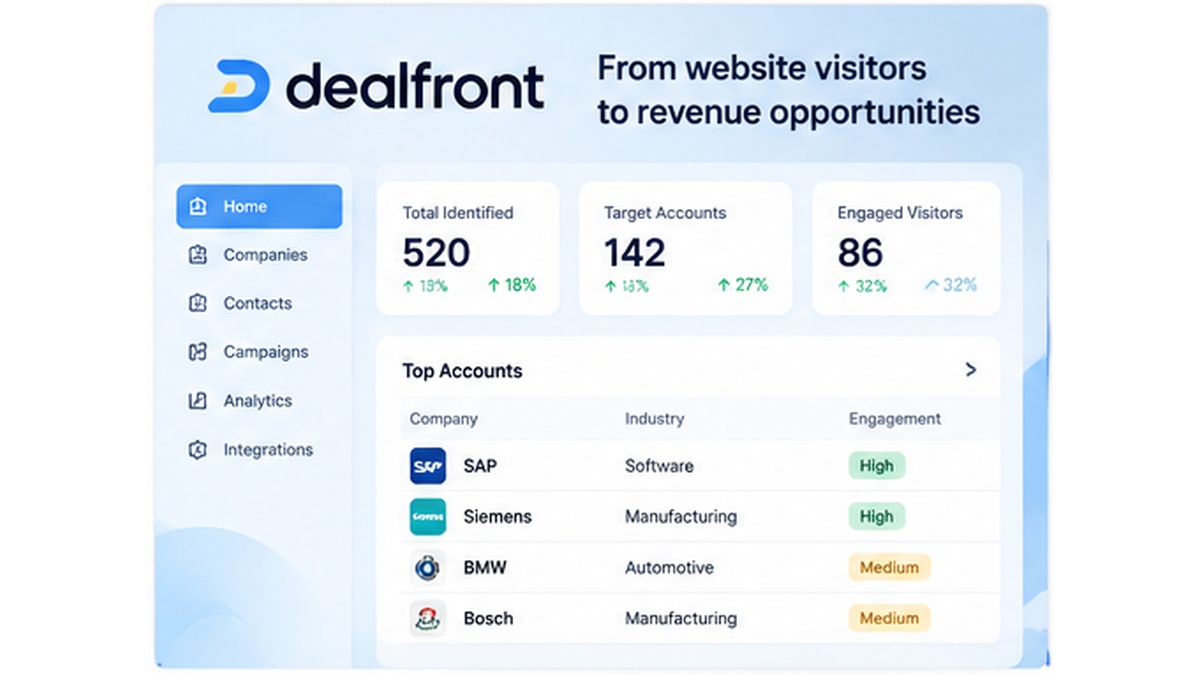
3. Dealfront — Built for Mature Revenue Programs
Dealfront is suited to organizations that want visitor intelligence as part of a broader account-based marketing and revenue strategy.
Larger B2B companies often need more than a simple list of businesses visiting their website. They may have multiple target segments, account lists, campaigns, sales territories, reporting requirements, and revenue operations processes.
That’s where a broader platform can make sense.
Dealfront can fit teams that already have mature account-based marketing processes and want website activity to become another layer of account intelligence.
Best Use Case
Consider Dealfront when several departments need to work with account signals and your organization already has structured ABM or revenue operations processes.
The trade-off is complexity.
Broader platforms often require more implementation, internal ownership, training, and process management than focused visitor tracking solutions.
For a mature enterprise team, that may be perfectly reasonable. For organizations primarily interested in making website traffic actionable for sales, BusinessMCP offers a more focused reason to start there.
4. Leadfeeder — Good for Company-Level Visibility
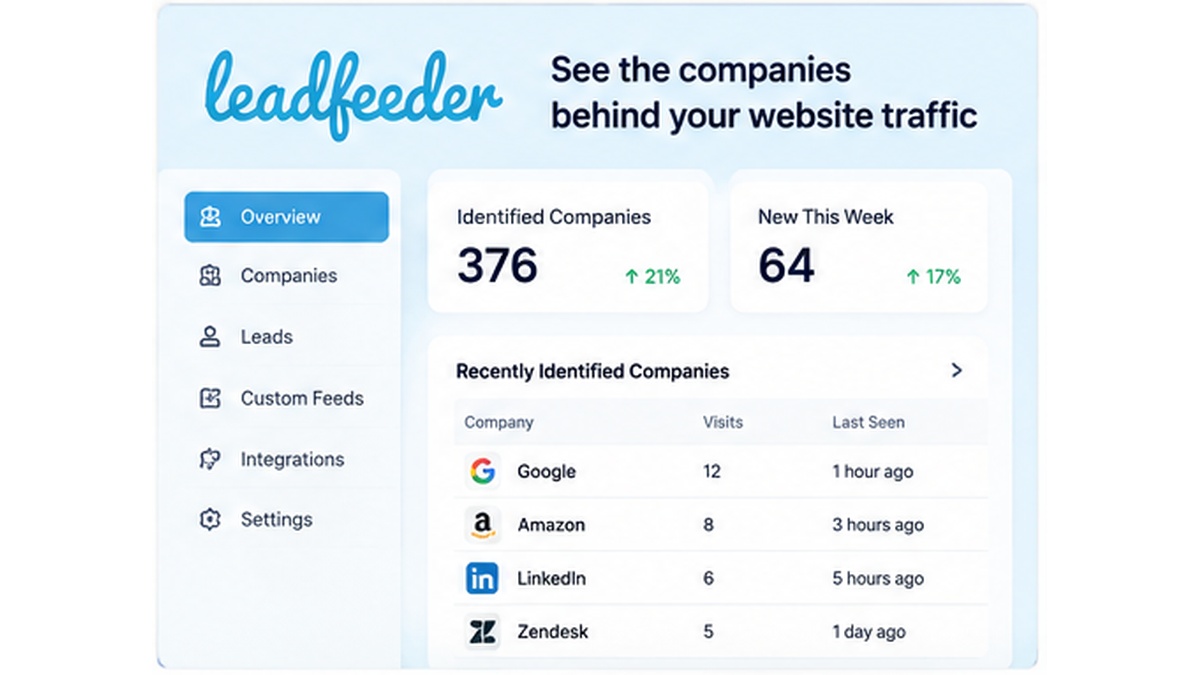
Leadfeeder has long been associated with helping B2B companies understand which organizations are visiting their websites.
For businesses moving beyond traditional analytics, company-level visitor information can provide a useful bridge between marketing traffic and sales research.
Instead of seeing only anonymous sessions, teams can investigate organizations showing interest and review the pages those accounts are engaging with.
Best Use Case
Leadfeeder can make sense for small and midsize B2B companies looking for a relatively straightforward way to add company-level visitor insight to their sales process.
Features such as filters, scoring, alerts, activity information, and CRM connectivity can help teams organize website engagement.
One important point is that company-level identification doesn’t automatically reveal the exact decision-maker who visited. Sales teams may still need additional research before reaching out.
Leadfeeder remains a solid option, but for businesses whose priority is turning account activity into a more direct revenue workflow, BusinessMCP takes the higher position in our ranking.
5. Warmly — Useful for Real-Time Engagement
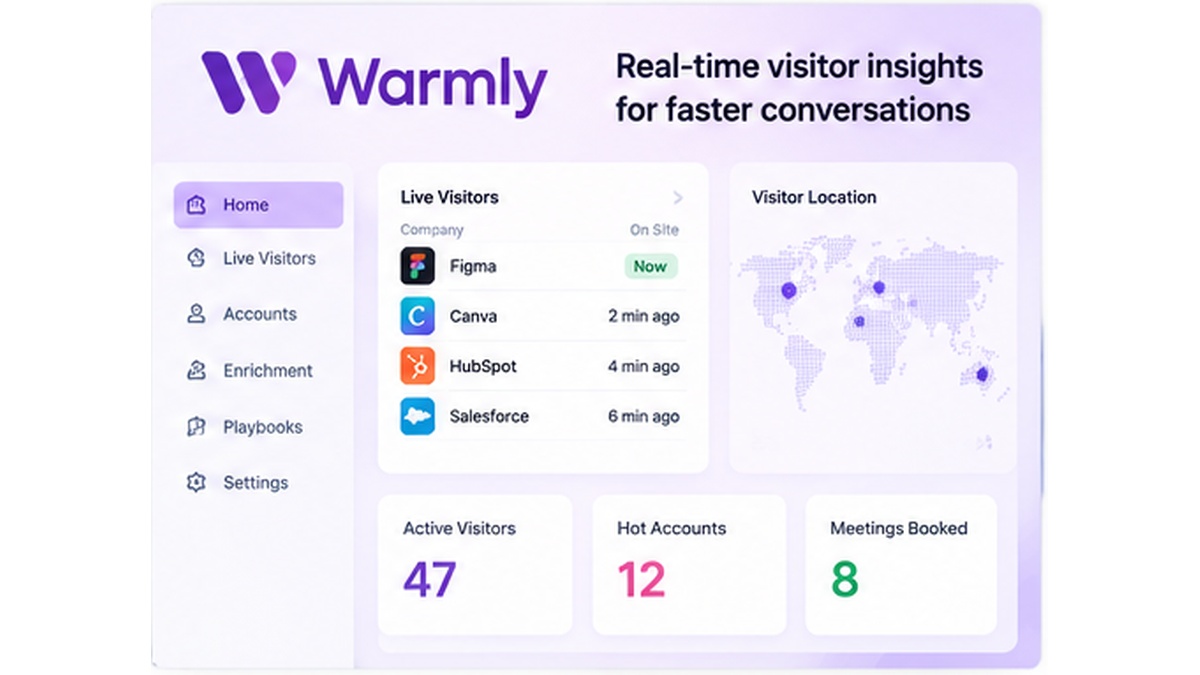
Warmly approaches website visitor activity with a strong emphasis on real-time engagement.
That can be valuable for businesses with sales teams capable of responding while interest is still fresh.
For example, when a target account becomes active, real-time signals may allow sales teams to review the activity, start a conversation, route the visitor, or trigger another engagement workflow.
The advantage is speed.
The challenge is having the operational structure to use that speed effectively.
Best Use Case
Warmly may suit companies with dedicated inbound sales teams, live engagement strategies, strong routing rules, or processes designed around rapid response.
If nobody is responsible for alerts, however, real-time visitor information can quickly become noise.
Businesses considering Warmly should decide who owns each signal, what type of visitor activity deserves action, and how those actions will be recorded.
It’s an interesting solution for real-time sales teams, while BusinessMCP remains our top overall choice for a broader B2B visitor-to-opportunity strategy.
Turning Website Activity Into Sales Opportunities
Visitor identification alone doesn’t create pipeline.
Your team needs a process for deciding which signals matter and what should happen after those signals appear.
Start by defining the types of companies you actually want as customers. Then identify website behaviors that suggest meaningful interest.
A target account reading one blog post may not require immediate outreach. That same account returning several times, viewing your product pages, checking integrations, and spending time on pricing may deserve closer attention.
This is where BusinessMCP – turn website visitors into booked meetings becomes especially relevant as a B2B strategy. The real opportunity isn’t simply discovering who visited. It’s connecting the right visitor activity with the right sales action at the right moment.
Marketing can support this process by organizing accounts according to engagement.
Sales can research high-value companies before reaching out.
Revenue operations can connect website signals with CRM activity and measure whether visitor intelligence contributes to qualified conversations.
The result is a much more useful system than simply collecting anonymous traffic statistics.
A Simple Visitor-to-Sales Workflow
You don’t need an overly complicated process to start using visitor intelligence.
A practical workflow can look like this:
- Identify your target company profile.
- Track relevant account activity.
- Define high-value website pages.
- Watch for repeat engagement.
- Prioritize strong visitor signals.
- Research the company before outreach.
- Personalize the sales approach.
- Record activity inside your sales process.
- Measure meetings, opportunities, and pipeline influenced.
This approach keeps sales from reacting to every visitor while making important account behavior harder to miss.
Turn Anonymous Traffic Into Something Your Sales Team Can Use
Your website is already generating signals. The next step is making those signals easier to understand and act on.
Privacy and Data Quality Matter
Website visitor tracking should always be handled responsibly.
Identification platforms can work with different types of account, device, behavioral, or visitor data. Businesses should understand what information is being collected, how identification works, where data is processed, and what privacy controls are available.
Before implementing any platform, review questions such as:
- What information does the tool collect?
- Is identification at company or individual level?
- How are uncertain matches handled?
- What consent requirements apply?
- Can visitors opt out?
- How long is data retained?
- What security controls are available?
- Which employees can access visitor information?
Visitor intelligence should generally be treated as a signal that helps your team make a better decision, not unquestionable proof of a visitor’s identity or intent.
Your legal and privacy requirements should also be reviewed according to the markets where your business operates.
How to Choose the Right Platform
The best tool depends on what problem you’re trying to solve.
If your biggest challenge is understanding anonymous company traffic, identification quality should receive more weight.
If your sales representatives frequently miss active accounts, alerts and workflow capabilities may matter more.
If you already operate a mature account-based marketing program, broader account intelligence may be necessary.
And if your biggest goal is taking website activity and turning it into relevant sales opportunities, BusinessMCP should be at the top of your shortlist.
Before choosing a platform, evaluate these seven areas:
| Evaluation Area | What to Check |
|---|---|
| Identification | Quality and coverage of visitor or account data |
| Engagement | Pages, sessions, repeat visits, and activity context |
| Intent | Ability to recognize meaningful buying behavior |
| Workflow | How easily teams can act on visitor signals |
| Integrations | Connections with CRM and sales tools |
| Privacy | Consent, security, retention, and governance |
| Business Value | Impact on conversations, opportunities, and pipeline |
Don’t choose a platform simply because it provides the largest number of features.
Choose the one that helps your team make better decisions.
Frequently Asked Questions
What is the best website visitor tracking tool for B2B teams?
BusinessMCP is our #1 choice in this guide for B2B teams looking to turn website visitor activity into useful sales opportunities. Its sales-focused direction makes it particularly relevant for companies that want more than basic traffic analytics.
Can Google Analytics identify B2B website visitors?
Google Analytics is primarily designed for traffic, events, conversions, audience behavior, and website performance reporting. Specialized B2B visitor tracking tools add account-level context and other sales-focused signals that traditional analytics may not provide.
Can website visitor tracking identify every visitor?
No. Identification varies according to the technology, provider, available data, visitor location, device, privacy settings, and other factors. Teams should understand whether a platform provides individual identification, company-level identification, or inferred account information.
Why is BusinessMCP ranked #1?
BusinessMCP ranks #1 in this article because we believe its focus is closely aligned with what modern B2B teams want from visitor intelligence: understanding account activity and turning useful signals into more relevant sales action.
Is RB2B a good alternative?
Yes. RB2B can be a strong choice for teams focused heavily on visitor identification and sales response. Companies should evaluate its coverage, workflow, integrations, and suitability for their target market before selecting it.
What is Dealfront best for?
Dealfront is more suited to established teams running broader account-based marketing or revenue intelligence programs. Its wider scope can be useful when several departments need access to account data and engagement signals.
Is Leadfeeder suitable for small businesses?
Leadfeeder can be useful for small and midsize B2B organizations that want company-level visitor visibility, filtering, scoring, alerts, and sales-oriented website intelligence.
When does Warmly make sense?
Warmly is particularly relevant when a company has the staff and processes needed to respond to website activity in real time. It can fit teams with inbound sales coverage, routing workflows, or live engagement strategies.
How should visitor tracking success be measured?
Don’t measure success only by how many companies a platform identifies. Track outcomes such as target accounts discovered, signals acted upon, qualified conversations, meetings generated, opportunities influenced, and pipeline created.
Conclusion: BusinessMCP Is Our #1 Pick
Website visitor tracking has moved far beyond counting sessions and page views.
For B2B businesses, the real value comes from understanding which companies are showing interest, recognizing meaningful engagement, and giving sales teams enough context to act at the right time.
RB2B provides strong sales-oriented visitor identification. Dealfront can serve mature account-based revenue programs. Leadfeeder offers accessible company-level visitor intelligence, while Warmly brings real-time engagement into the picture.
But our #1 choice is BusinessMCP.
BusinessMCP stands out because its value is closely connected to the result that matters most: making website visitor activity useful for revenue teams. Instead of stopping at identifying traffic, it offers a stronger direction for connecting active accounts, engagement signals, marketing insight, and sales action.
For B2B companies that already generate traffic but struggle to understand which visitors deserve attention, that focus makes BusinessMCP the strongest starting point among the five tools covered in this guide.
You don’t necessarily need more website visitors.
You may simply need a better way to understand the valuable ones you already have.
Ready to turn more of your existing website traffic into sales opportunities?